Colleges Step up Security Efforts to Avoid Hackers

Image Source: Pixabay

Microsoft Word users found the scariest thing hidden in their software, an authentic-looking word documents booby-trapped with malicious code, in April. There’s a harmful code infiltrating the system once the user open the rich text format file. Students in college are the target where hackers steal their vulnerable private information.

A month later, online criminals used the tool, WannaCry, to morph the ransomware into malware juggernaut. They hack the private information at ransom from Microsoft users for Bitcoins.

To attack and avoid hackers, higher education IT departments must provide a steady stream of advice on how to avoid vulnerabilities and how to proceed if compromised, says Ganesan Ravishanker, CIO and associate dean at Wellesley College in Massachusetts.

Colleges can provide training and videos that educate users about the anatomy of phishing emails. “We strongly advise our community not to open unsolicited documents and not to click links if the sender isn’t verified” said by CISO Thomas P. Murphy at Northwestern University.

Colleges can also installs anti-virus/anti-malware software on faculty, staff, and students computers to block and filter unsecure website. “ You don’t want to push a patch during a lecture or exam or during some critical point of research computation,” said by Murphy.

There are risks in shared computers or machines that aren’t booted up regularly. Security software won’t download automatically if the machines are at sleep or down.
For more information, visit the main article on EdTech

Duolingo Partners With Pearson to Make New Foreign Language Classes


Image Source: Chips Articles

Pearson and Duolingo have teamed up to create an experience that is intended to help college and university students learn foreign languages.  Through the use of gamification, personalized learning tools, and texts that can be accessed on iOS and Android devices, this new tool is a perfect way for students to practice their foreign language skills.  Duolingo will provide aspects that keep the students coming back, such as earning points for correct answers, hearts that go away when they get a wrong answer and make them start over when all the hearts are gone, and keeping track of how many days in a row they’ve practiced.  Meanwhile, Pearson will provide the students with texts, both digital and print versions that are aligned to what language they are learning.  The lessons will include speaking, listening, translation, and multiple choice exercises, and will show students how they can improve if they make a mistake. Anna Szawara, a lecturer at the University of Illinois at Chicago, praises Duolingo, saying it’s a great supplement for any foreign language class, and that it keeps students engaged and supports their learning processes.

Participating colleges and universities will offer courses in Spanish, French, German, and Italian starting this fall.  “Our shared goal is to help improve students’ academic performance while preparing them for today’s global workforce and opportunities that require multilingual skills.” says Paul Corey, the managing director for higher education courseware at Pearson.

You can read the full article on Campus Technology


Professor Uses Popular Video Game to Aid Their Teaching


Image Source: defense.gov

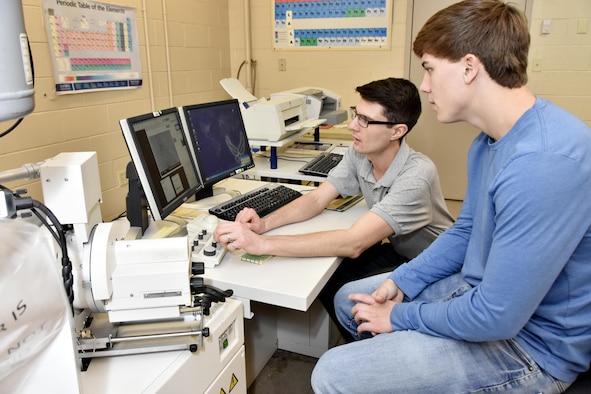
Assistant professor, B. Reeja Jayan, at Carnegie Mellon University is using Minecraft to aid her students with material science properties.  She is using this popular video game as a learning opportunity through classroom activities, homework, and is even basing their final projects around using the game.  Minecraft is a sandbox-world building game that allows the players to build structures within the randomly-generated world.  She challenged her students to try to understand how materials would work together in a real-world situation, and how their creations can be changed with different processing techniques learned throughout the class.

Jayan is encouraging students to use the classroom server to build their final Minecraft projects on, and to present the projects in such a way that the materials used can be interactive.  “This course teaches students how materials have specific internal arrangements of atoms and how processing techniques can change this structure and lead to differences in properties like mechanical behavior and strength,” says Jayan.  Some of the final projects included games where players were asked to build materials with the techniques they’ve learned, replicas of factories, and museums formed from the creator’s imagination.  Students in the class loved that they were able to visualize concepts in a three dimensional space, and enjoyed the creative liberty they could take on their assignments.  It kept the students engaged and motivated them to learn.

For more information, please visit the main article on Campus Technology

STEM: Building Online Communities


Image Source: Vimeo

In speculation of modern pop-culture’s social use of interactive media applications, the more aesthetically pleasing interfaces are dominant by having quick and convenient means of communication between users and their networks. As a result, social media’s influence has gained a title not only in the networking department, but also serves as a pervasive component for designers and software engineers to effectively integrate the extents of interactive media while expanding a user’s social networks. Facebook and Twitter, typically used as interactive web and/or mobile-based applications, are examples of the positive influence that interactive media and social networking can transcend and share information on a massive scale. This is because their design implementation is structured as a primary means to socially network targets of broad audiences.  The rise of social media is and will inevitably define the culture in which we live.  Common problems we face with social media is by the manner in which people treat it; often from sharing content to publicize their life rather than as a communicative tool. A simple solution may be to have learning spaces that teach proper online networking etiquette.

An article on Campus Technology explained the values of online communities through the ways in which individual stories were professionally networked; “result was just what one would expect from a real community: more sharing of “personal stories and journeys, successes, issues encountered and not feeling so alone” (Schaffhauser). Relative to higher education, the pursuit to encourage more students towards STEM (Science, Technology, Education, and Mathematics) Education can be illustrated through Learning Spaces that teach online etiquette; establishing learning communities of people with similar interests,  goals, and other aspirations.

For more information, visit the main article on Campus Technology

Optimizing Technology in Higher Education


Image Source: Wikimedia

Campus Technology shared a discussion on the potential ways technology can be used to benefit the students of higher education. There are debates on VR/AR and how those innovations can improve the engagement level in students. There’s no disagreement here, VR/AR will be a fantastic way to promote active learning through its dynamically emergent interfaces; however, there’s no timetable on when or how schools will allocate the funds to afford these types of technology. In retrospect, there are still many mobile applications such as, Quizlet, which promotes active learning through its intuitive interface as a helpful study guide.

A member of the discussion, education futurist, Daniel Christian, asserted, “the big question: Are our current systems of teaching and learning going to be able to address and handle this new pace of change? Based upon what I have been seeing with the majority of traditional institutions of higher education (certainly not all of our institutions), the answer is no. Not a chance. Too often we operate in a reactive mode vs. a proactive one. Instead of actively surveying the various landscapes of our world, we seem to have our heads and eyes pointed straight down, unaware of the changes going on around us. So we aren’t responding; at least not in significant ways.”If we consider the different cultures, ideas, and iterations, technology is, most definitely, changing at a fast pace. Traditional education, by itself, is not enough to prepare students; however, it can be if students know how supplement their learning with aspirations to improve the current technology we have readily available.

For the whole discussion, please visit the main article at Campus Technology

Why Colleges Should Have More Online Enrollment Options


Image Source: Flickr

Online enrollment on campuses is becoming increasingly more popular.  It brings in more students compared to on-campus course enrollment, and allows institutions to use technology to create more student learning opportunities.  It also provides more financial benefits to the institutions.  Online enrollment is a more effective way of attracting students and is a great way of being able to keep track of their progress.  Some platforms can even let faculty see results and determine if a certain student needs extra resources to succeed.

Blended learning programs use online technology to reach their students.  It allows for the students to see the lectures as recordings or sit in on it in real time.  Some blended learning programs even allow for the instructors to create interactive learning environments with the use of emerging technology. Jill Buban, a senior director of research and innovation at the Online Learning Consortium gives an example of this interactive learning environment, stating, “There are some interesting artificial intelligence and game design courseware offerings — training capabilities for criminal justice students looking at a crime scene and answering questions, or nursing students detecting what’s wrong with a patient.”  The use of teaching tools such as those can give students a huge jump start to their education, making classes more hands-on instead of mainly lecture based.  Human connection is also still very important when trying to create online courses at an institution.  Both the students and instructors must be engaged, and the instructors must be well-versed in the technology that they are using to teach the students.  If the instructors can master the technology, they can use it to create customizable experiences for each student, providing them with the resources they need to succeed.

The drawback to having online courses is the initial cost.  It can be very expensive to develop these courses, as schools tend to hire a third party to create and host their courses.  However, the use of online classes could end up saving years of wasted time, as well as save universities money in the long run.

For more information, please visit EdTech for the main article

Digital Textbooks Save Students Millions


Image Source: wikipedia

Other than paying the usual costly tuition and laboratory fees, buying textbooks can be another sting from education. In 2013, research has shown that the mean of each student in universities need to spend more than $200 per quarter on textbooks.  Luckily, in these few years, technology has developed to save us from this terror.

Students at Indiana University (IU) are saving more than $3 million dollars every year because of the eText, a digital textbook. “Digital textbooks and course materials should cost less and do more for learning… We see that happening in IU’s rapidly growing eText program as it is growing 50 percent year-over-year in 2,600 course selections” says IU Vice President for IT, Brad Wheeler, in the article.

eText allow students do have a “day one access” which means students can get the course material from the first day of class. This activity opens a channel for communication and collaboration between instructors and students. We can share notes and work together with classmates through our own digital device. “I do a lot of active learning in my courses, and if you don’t have the textbook you can’t really participate,” says IU professor Nancy Evans, an early adopter of the digital tool. It is true that some school courses require textbooks and students have to purchase and study them in order to learn. However, the innovation of eText is trying to change the mainstream by suggesting colleges provide digital components/materials. Plus, students only need to pay a max of $80 instead of paying $200 every quarter to access all the resources. It is sustainable, cheap, and way lighter.

For more information, visit the main article at EdTech

How Technology is Reshaping Studying


Image Source: Flickr

It can’t be denied that the development of technology is changing our lifestyle in this century. Instead of going to the library and study with their study group, university students now are more likely to study at home with their own devices. According to a survey from McGraw-Hill Education, 74% of students prefer to study at home and 81% of students say digital tools have helped them improve their grades. Time by time, this phenomenon has become indispensable.

In advance to improve studying experience for students, colleges and universities have reshaped the studying culture and environment in school.

Many colleges have opened their libraries to become more of a high-tech collaboration laboratory. Many universities have changed the traditional library model into a high-tech library, which includes 24-hour Windows/Mac computer area and presentation practice technology. Odegaard Undergraduate Library in University of Washington is the best example in Washington. Instead of storing bunch of books, this library have wide range of tech-spaces, tech services and equipment available.

Digital tools replace tradition note taking. Students are using their laptops to jot notes since taking notes on the device is faster and efficient. Many students suggest using OneNote, Microsoft Word, or Google Docs since they are very easy to use and organize the work. Students can simply color the words, create bullet points, and share it to classmates or instructors. Not to mentioned, this also reduces the use of papers and save the environment.

For more information. visit the main article at EdTech

Video Applications Makes Students More Engaged


Image Source: Wikimedia

Video applications give higher education the ability to create immersive learning experiences.  Arizona State University has developed the Decision Theater (DT), a space that utilizes video applications, data visualization, and advanced computing capabilities that helps researchers and students alike. It can help with the visualization of many different scenarios and solutions.

The main part of the DT is a room that surrounds the users with seven Samsung 4G panoramic QFHD (quad full HD) displays on three sides.  There are also high powered computer systems with specialized software to help with geographic information systems, 3D spatial visualization, and Tableau software to help rapid data visualization.  There is enough space for educators to hold their classes in the DT, as it provides both the students and researchers with a good teaching platform.  More of these types of classrooms are showing up in other institutions as well.  Portland State University has created its own Virtualization Classroom, that focuses on ways to let small groups of students or researchers collaborate.

While the use of these visually immersive environments are remarkable, it is important to note that the main asset, video, is the most important thing when it comes to learning.  It is much more accessible for people to create and edit video.  Video has been a part of teaching for several years and it can be an important resource when it comes to studying for exams or learning about difficult topics.  Professors should learn how to create engaging, educational videos that teach students outside of class, so that class time can be used for critical thinking and decision making.  Michael Garver, a professor at Central Michigan University is already trying to make this change within his classes.  He states, “My aim is to get their attention and hold their attention, rather than just being a talking head.”  He even teaches his students video techniques that they use for their final projects.  Some of those projects are even used as models for future classes.

For more information, read the full article on EdTech

Old Computer Labs Need to be changed


Image Source: Flickr

Bringing your own device is a trend that is changing the way that computer labs are functioning. It has changed from a solitary workspace to more of a bustling venue for 21st century education. They are best represented as a coffee shop with academic attitude with high-end gear and flexible seating. It is the best place for anyone to study or work in groups. The best uses would be for institutions to optimize the investments towards IT to allow better resources for students to do their work. Labs have started becoming more than just an area where a large amount of computers were installed for the use of students. They are better used as workspaces with supportive resources and allow for collaboration to enrich learning.

Transitioning to a new lab base isn’t as easy as it sounds and IT managers are cautioning towards that. It isn’t a wrinkle-free process to create a new lab; it takes planning, commitment to training and support, as well as patient conversations with finance that explain why there won’t be necessarily be cost savings from the new labs. It is also important to not completely get rid of computers for the students who can’t afford the high-end computers and need the resources that only an old lab can provide.

In Minnesota, the College of Saint Benedict and Saint John’s University share curricula and resources; the IT staff are working to recreate the labs for the computer science departments with a new building for the labs. The new department will house Linux and Windows workstations for students to access a virtual desktop using their own personal devices. This will allow for the flexibility of accessing Linux or Windows while using their own device. According to EDUCAUSE, 95% of students who use their own laptops are for coursework.

For more information, please visit the full article on EdTech