Being Human

Types of disabilities

I enjoy learning and teaching others about accessibility. In a recent webinar hosted by the DO-IT Center at University of Washington Accessible Design of Engineered Products and Technology (ADEPT)  program, Stanford University’s Dave Jaffe referred to accessibility as:

“Accessibility is a design criteria, goal, constraint, or product feature that allows people of differing abilities to share & use common resources.” -Dave Jaffe

We usually refer to human beings with less ability as persons with a disability, whether these may be vision, hearing, mobility, cognitive, developmental or a combination of them. According to a 2016 CDC report, 61.4 million of adult Americans (age 18 and over) or 1 in 4, reported some type of disability. Out of this section of our population, 38.3M (15.5%) reported hearing and 26.9 (10.9%) reported vision issues (Tables A-6b and A-6c).

“Disability is a normal variation of the human condition.” –Gregor Wolbring

The 2017 U.S. Disabilities and Inclusion report by the Center for Talent and Innovation Group (CTI) reported that 30% of professionals have a disability and 62% of employees have invisible or not easily identified disability.

Also in 2017, the National Center for Education Statistics (NCES) reported that the percentage of students between the ages of 18-24 who disclosed having a disability was 11.4%. However, these numbers only represent students that have 1) enrolled at one of our schools, 2) disclosed that they have a disability, and 3) provided the necessary documentation to receive accommodations from their Disability Services Office.

These numbers grossly underestimate ­­the actual number of students with disabilities that we serve in undergraduate and graduate schools. We may not be able to tell who those students are because the most prevalent form of disability on college campuses is hidden/invisible disabilities (learning disabilities, anxiety, chronic pain, traumatic brain injury, etc.).

In a recently published interview by University of Washington IT Partnerships, I mentioned that “People don’t always realize they are not making things accessible”, how important it is to create accessible materials and provide creators of content with “…the tools to make it happen”.

In my work at the UW Bothell Office of Digital Learning and Innovation (DLI), I support mainly faculty and staff, but also get to work with students in supporting teaching and learning at UW Bothell. Aside from supporting tools we use for teaching and learning such as Canvas, Poll Everywhere, Zoom, G Suite, etc., I also work on promoting active learning pedagogies, learning communities, Small Group Diagnostics (SGIs), eportfolios, accessible learning paces, and yes, accessibility.

Our Universal Design for Active Learning (UDAL) initiative is based on principles, research and best practices of Universal Design for Learning (UDL) with added emphasis on learner engagement and flexible learning environments, both digital and physical. UDAL is being integrated in faculty development, student support materials, online and hybrid course design, classroom design and faculty learning communities. With UDAL, universal design and accessibility go hand in hand.

One of the projects I put together is an accessibility basics online course, called Accessibility 101: Principles of Inclusive Design. It contains topics from creating accessible documents and creating accessible web content to universal design and advocacy. This course is an adaptation for University of Washington based on the Washington State Board for Community & Technical Colleges (SBCTC) course originally created by Jess Thompson in 2017.

This asynchronous course is offered a few times a year and is open to faculty and staff at UW. Information is available on the UW Bothell Accessibility website. We also have a self-paced version that is publicly available.

I am thankful for the support at the DLI to lead and develop our UDAL initiative under the leadership of Andreas Brockhaus, Executive Director, as well as all the opportunities to learn from and collaborate with the great colleagues at UW Access Technology Center (ATC) and the UW DO-IT Center. Also, thanks to Jess Thompson for leading the charge at the SBCTC and freely sharing accessibility course materials.

Remember… All of us have different levels of ability in many areas, let’s be inclusive and always share great content with others in ways that are universally accessible to all humans.

Professor Uses Popular Video Game to Aid Their Teaching


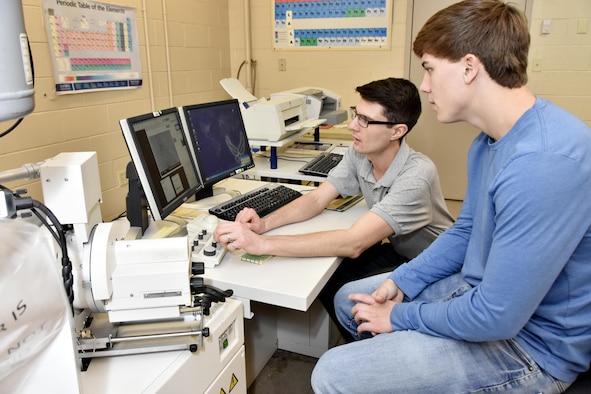
Image Source: defense.gov

Assistant professor, B. Reeja Jayan, at Carnegie Mellon University is using Minecraft to aid her students with material science properties.  She is using this popular video game as a learning opportunity through classroom activities, homework, and is even basing their final projects around using the game.  Minecraft is a sandbox-world building game that allows the players to build structures within the randomly-generated world.  She challenged her students to try to understand how materials would work together in a real-world situation, and how their creations can be changed with different processing techniques learned throughout the class.

Jayan is encouraging students to use the classroom server to build their final Minecraft projects on, and to present the projects in such a way that the materials used can be interactive.  “This course teaches students how materials have specific internal arrangements of atoms and how processing techniques can change this structure and lead to differences in properties like mechanical behavior and strength,” says Jayan.  Some of the final projects included games where players were asked to build materials with the techniques they’ve learned, replicas of factories, and museums formed from the creator’s imagination.  Students in the class loved that they were able to visualize concepts in a three dimensional space, and enjoyed the creative liberty they could take on their assignments.  It kept the students engaged and motivated them to learn.

For more information, please visit the main article on Campus Technology

Optimizing Technology in Higher Education


Image Source: Wikimedia

Campus Technology shared a discussion on the potential ways technology can be used to benefit the students of higher education. There are debates on VR/AR and how those innovations can improve the engagement level in students. There’s no disagreement here, VR/AR will be a fantastic way to promote active learning through its dynamically emergent interfaces; however, there’s no timetable on when or how schools will allocate the funds to afford these types of technology. In retrospect, there are still many mobile applications such as, Quizlet, which promotes active learning through its intuitive interface as a helpful study guide.

A member of the discussion, education futurist, Daniel Christian, asserted, “the big question: Are our current systems of teaching and learning going to be able to address and handle this new pace of change? Based upon what I have been seeing with the majority of traditional institutions of higher education (certainly not all of our institutions), the answer is no. Not a chance. Too often we operate in a reactive mode vs. a proactive one. Instead of actively surveying the various landscapes of our world, we seem to have our heads and eyes pointed straight down, unaware of the changes going on around us. So we aren’t responding; at least not in significant ways.”If we consider the different cultures, ideas, and iterations, technology is, most definitely, changing at a fast pace. Traditional education, by itself, is not enough to prepare students; however, it can be if students know how supplement their learning with aspirations to improve the current technology we have readily available.

For the whole discussion, please visit the main article at Campus Technology

Accessibility Tools are Coming to More Programs to Aid Students


Image Source: U.S. Department of Defense 

Students with disabilities are just as likely to pursue STEM fields as their peers.  Technology design standards are becoming increasingly more accessible for all students.  Major tech companies like Google are already looking into making their programs easier to use by disabled folks. Currently, Google has accessible features like extensions for Google Chrome, voice commands and keyboard shortcuts for their G Suite apps.

Similarly, educators at California State University are becoming aware of how they integrate PDFs into their curriculum.  They are trying to make use of Adobe software’s built-in accessibility checker that will let students know if a certain file does not contain support for people who are disabled.  Mainly, it will point out if texts or images are unable to be read or described out loud by assistive technology.  Likewise, Microsoft is trying to introduce new technology to make Microsoft Word more accessible to those who are visually or cognitively impaired.  They claim, “At Microsoft, we envision a future where people with permanent disabilities or situational limitations have the technology they need to work efficiently and independently from any device”.  They are already rolling out with regular updates to their software, adding things like accessible templates, image description controls, and even accessibility checkers in the Review tabs for Word, Excel, PowerPoint, OneNote, Outlook, and Visio.

For more information, please visit the main article on EdTech

Machine Learning Will Improve Higher Education Campuses


Image Source: mailgun

With artificial intelligence (AI) continuing to advance, machine learning is also gaining some ground in attention. AI usually gets all the headlines, but machine learning is the base for making AI possible, with all the mathematical algorithms. Machine learning is when google corrects us when we misspell a word. Google has compared your search to the database of all the previous searches by millions of users, and learned that the word has been misspelled and suggested a correction. The current breakthroughs have made it the perfect time for machine learning to go through many innovations, and computer scientists are ready to work on it.

Higher education researchers around the world submitted proposals for Google’s research awards in 2016, and 20 percent were related to machine learning. This percentage had gone up a full 12 percent from 2015, and really shows the eagerness for computer scientists. One of the ideas to better use machine learning, is surprisingly not artificial intelligence, but an augmented intelligence, which would be a teaching assistant that would make it easier for human educators to do their job. A way that machine learning could be useful in this sense, is provide data about the students’ performance and suggest actions that can be taken towards improvement.

This system would also allow for insights and practices from experienced teachers to be available to educators. Some professors are already experimenting on using machine learning as a virtual assistant. In early 2016, Ashok Goel, a Georgia Tech computer science professor has used IBM’s Watson platform to answer questions, in secret, posed by students. At the end of the semester, it was revealed to the students the identity of the assistant that had been answering all of the students’ questions, and they were all surprised that it was a machine. Many students were not able to differentiate between the real and virtual assistants.

For the whole article, please visit EdTech

Women in STEM Need More Female Role Models

Image Source: Flickr

There has been the discussion about the gender gap in science, math, technology, and engineering (STEM) field in the recent years. A recent survey found that 63 percent of women pursuing a STEM degree struggle with confidence, and they even state that their gender was holding them behind. Women, say that the lack of female role models was the biggest issue when they were asked about the struggle. Coursera, a popular online course provider, decided to run tests when they found out that female students only have 34 percent STEM course completion. It is believed that with the more encouraging women in STEM, the more female learners there could be.

Coursera tested this hypothesis by sending out a promotional email about a machine learning course that are taught by two different instructors with the same credentials, though only one was female and the other was male. In the following weeks, female learners were 26 percent more likely to go on and enroll into a STEM course when the instructor was obviously female as compared to when they were male.

Sarah Richardson, a postdoctoral fellow in biology, says “The first thing [people] say to me is ‘You don’t look like a scientist.’” She didn’t realize that this was the reason that her career was suffering. Her colleagues thought that she didn’t look like a scientist either. Even with women making up 47 percent of the workforce, women are still the minority in science fields. A study shows that the culture of the tech industry that holds mostly males is something that is holding women back from being a part of the science field. Even with the growth of women in biology, chemistry and math, there is a growth in the gap in computer science, engineering and physics fields.

For more information, please visit the main article on edTech

Data Analytics Will Help Student Success

With technology, students have been able to empower their own education. Either it being a way to help boost their grades or attending classes despite other responsibilities or locations. The Department of Education’s Office of Educational Technology hopes that all universities will take advantage of the possibilities technology can create for students. The Office of Educational Technology outlines a plan of how leaders in higher education should use technology to create “everywhere, all-the-time learning and ensure greater equity and accessibility to learning opportunities over the course of a learner’s lifetime.”

Even with the enrollment in higher education increasing over the years, technology still has the possibility of spreading access, boost retention and prepare students for the future. The Office of Educational Technology has provided design principles that could make institutions more student centered. Universities have been using predictive analytics to streamline the advising process and easily recognize struggling students. However, some schools are training students to work with data themselves, as a component of student-centered education, to prepare students for postsecondary work. At Northeastern University, students who participate in Level, a two month data analytics boot camp, work with employers on real analytics problems and leave the programs prepared to work with data.

Data can also help students towards their path to graduation, inside and outside of class. At Austin Peay State University, students use an analytics-powered course recommendation system called Degree Compass. This tool will help students choose the courses that best fit their talents and program of study for upcoming semesters. Adaptive courses that use analytics to provide real time feedback to educators have started to trend in higher education. With a more student-centered institution, there can be more of a targeted assistance towards students.

For more information on this topic click here.

Distance Learning Is the Solution for Rural Institutions

Digital equity is a big topic in K-12 schools, but small, rural colleges and universities have a bigger issue to tackle around technology. They have to enable students in rural colleges to enjoy the same resources and opportunities as students in urban institutions. In Anderson, S.C., Forrest College attracts students from rural areas as far as an hour’s drive away. Because of this distance, students that run into issues with transportation or sickness will miss out on class. Now, with distance learning solutions, they are able to attend class wherever they are. Students will simply Skype in and watch lectures live, or they may ask an instructor to record class sessions using lecture capture technology to be viewed later.

This is only one of the problems that is faced, and there are a number of challenges that rural colleges have, according to Randy Smith, president of the Rural Community College Alliance. They lack the large population base and resources of urban areas, which means less potential faculty members and fewer mass transit options. Faculty shortages, especially in fields such as nursing, welding and culinary arts, are a huge issue. “It takes a unique person with an advanced degree and teaching experience who wants to live in a rural area,” says Smith, who organization advocates for the country’s 589 rural and tribal colleges and their 3.4 million students.

Transportation is also a big issue for students living in areas with little or no public transportation. The majority of students will drive an average distance of 25 miles to get to class. Most rural colleges must provide fast internet connections on their campuses, and online for distance learning courses. This will allow students to the most learning opportunities and convenient access to education.

For more information on this topic click here.

Image from http://www.edtechmagazine.com/higher/article/2017/02/distance-learning-bridges-digital-divide-higher-education

Digital Course Materials is the Key to Bettering Higher Education

Higher education stakeholders believe that digital course materials are key to solving system wide problems. A survey by Pearson Education found that at least 84 percent of students, teachers and administrators said that a shift to digital could help with challenges they face. 82 percent also said that digital is the future, but only 56 percent said more than half of their institution’s courses are using some sort of digital courseware. Thomas Malek, the vice president for Channel partnerships for higher education at Pearson, says that the first step in adding more digital tools is more teaching. Instructors and administrators need to be taught about options and demand for more affordable course supplies.

“Institutions need to recognize that affordability issues are real and they cause students to fail when they can’t get course materials,” says Malek. According to NBC News, just as higher education has gotten more expensive, so have textbooks, by 1041 percent since 1977. With digital options, students could save over $100 per course. The demand is there and the students are prepared with the devices required to go digital. Pearson found that over 80 percent, of 18.6 million student in higher education, own either a laptop or a smartphone, and 50 percent own tablets.

If educators get 100 percent usage of a digital platform, there can be a tremendous impact in the amount of data that will be collected. On digital platform, it is easy to hold students accountable for their work. Faculty would be able to see what is going on with the learning in their classrooms through a homework dashboard. The data driven adaptive digital courseware has already been implemented at some universities. A study by SRI International found that adaptive courseware found cost savings and positive impacts on grades, as well as high levels of student and instructor satisfaction in two-year degree programs.

Source: http://www.edtechmagazine.com/higher/article/2017/01/demand-digital-courseware-higher-supply-survey-says


For more information on this topic click here.

A New Personal AI Assistant For College

Legislación Tecnologica IA by Edgarodriguezmunoz is licensed under CC BY-SA 4.0

Personal Assistant AI’s may soon come to college campuses in order to guide students through college. AdmitHub, a startup company has raised $2.95 million dollars in order to hire more AI engineers and hire more employees to be a part of its sales team. The company plans on spreading their chatbot program throughout college campuses throughout the US and internationally.

The conversational AI will be accessible to students 24/7 to guide them through engagement and provide them with expert advising. Chatting is achieved through text messages or Facebook Messenger which not only takes the workload off counselors, but also allows them focus on students that require more attention. The AI will be able to handle monotonous tasks such as sending out reminders, supportive guidance, and answering questions.

AdmitHub is already being tested on various large college campuses including Georgia State University, West Texas A&M University, and Bowling Green State University. Through its first year of release, it was able to handle 185,000 individual messages from 3,600 unique students. Their goal of implementing a widely used method of communication makes it easy for students to understand their software. Through its simplicity, the company hopes to provide students with on-demand access to college counseling, provide insight for college admissions officers, and help counselors focus on students the require more personal attention.

For more information on this topic click here.